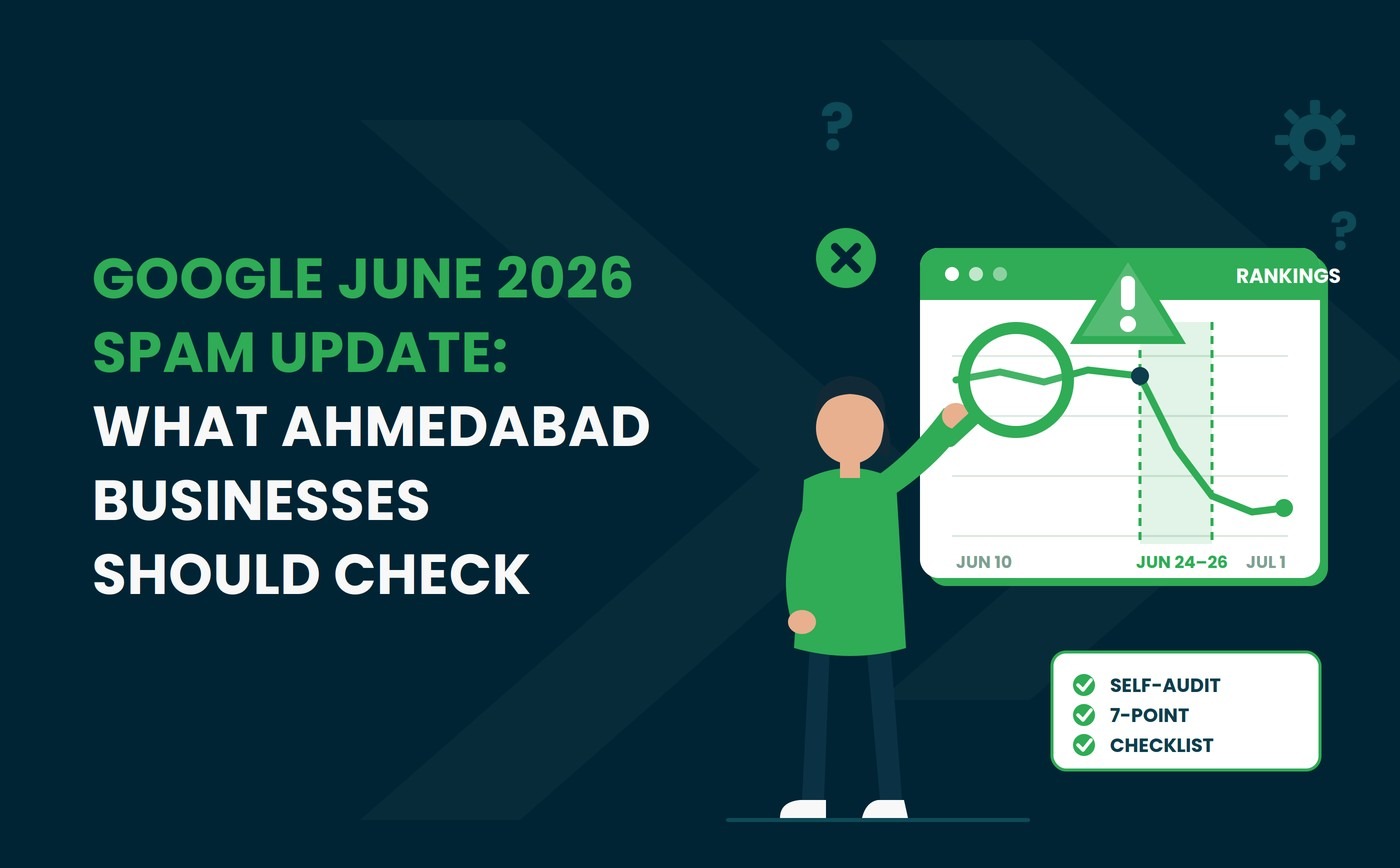
Did your Google rankings jump or drop somewhere between June 24 and June 26, 2026? If yes, it probably had nothing to do with anything you did that week. Google rolled out its June 2026 spam update in exactly that window, and we watched it reshuffle results in real time across the accounts we manage, including some very competitive Ahmedabad keywords that had been stable for months.
In this post, I will explain what this update actually was in plain language, what it targeted, and most importantly, give you a 7-point checklist you can run on your own website this week. Everything here comes from Google’s official announcements and from real Search Console data in accounts we monitor. No guesswork.
What Is the Google June 2026 Spam Update?
The June 2026 spam update is a global Google algorithm update that ran from June 24 to June 26, 2026. It improved SpamBrain, Google’s AI-based spam detection system, at catching content that breaks Google’s spam policies. Think templated pages, keyword stuffing, and thin doorway content. It did not target backlinks.
Here are the confirmed facts, point by point:
- Rollout window: June 24 to June 26, 2026, confirmed on Google’s Search Status Dashboard. At about two days, this was a fast one. For comparison, the March 2026 spam update finished in under 20 hours, while the August 2025 update dragged on for almost four weeks.
- Scope: Global, all languages. A business in Ahmedabad was just as exposed as one in New York.
- The system behind it: SpamBrain. Every spam update since 2022 has been an upgrade to this system.
- What it did NOT touch: Industry reporting confirmed this update excluded link spam and site reputation abuse. So if your rankings moved in that window, your backlinks are probably not the reason. Keep that in mind before you do anything drastic.
- What it DID go after: Content-level problems. Scaled or templated content, keyword-stuffed pages, thin location pages, and similar on-page patterns.
One more thing worth knowing. This was the second spam update of 2026, and it landed barely three weeks after the May 2026 core update wrapped up on June 2. Google is clearly enforcing content quality more often, and more aggressively, than it did even a year ago.
What We Saw in Real Accounts
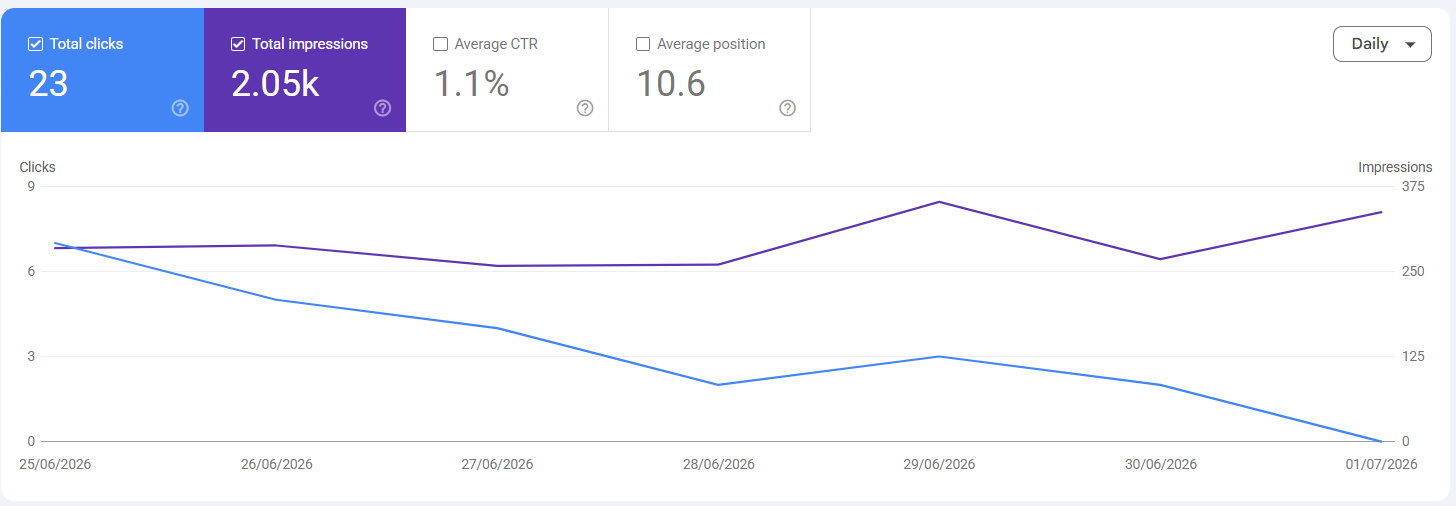
Between June 25 and July 1, we pulled daily Search Console data across the websites we manage. Two patterns stood out, and both of them matter for how you should respond.
First, the drops were step changes, not slow slides. Pages that got hit held their usual position right through June 24, then fell 2 to 4 spots on June 25 or 26 and settled at a new level. On one competitive Ahmedabad service keyword we track, a page that had sat at position 4 to 5 for months moved to position 8 or 9 within five days of the rollout starting. When you see a flat line, then a sudden step down on a known update date, that is the algorithm talking. A slow decline usually means something else.
Second, the hits were page-specific, not sitewide. On the same domains, other content held steady or even grew. Detailed pricing and cost guides, for example, kept their positions and picked up impressions right through the update. Google did not punish whole websites. It re-scored individual pages and query types.
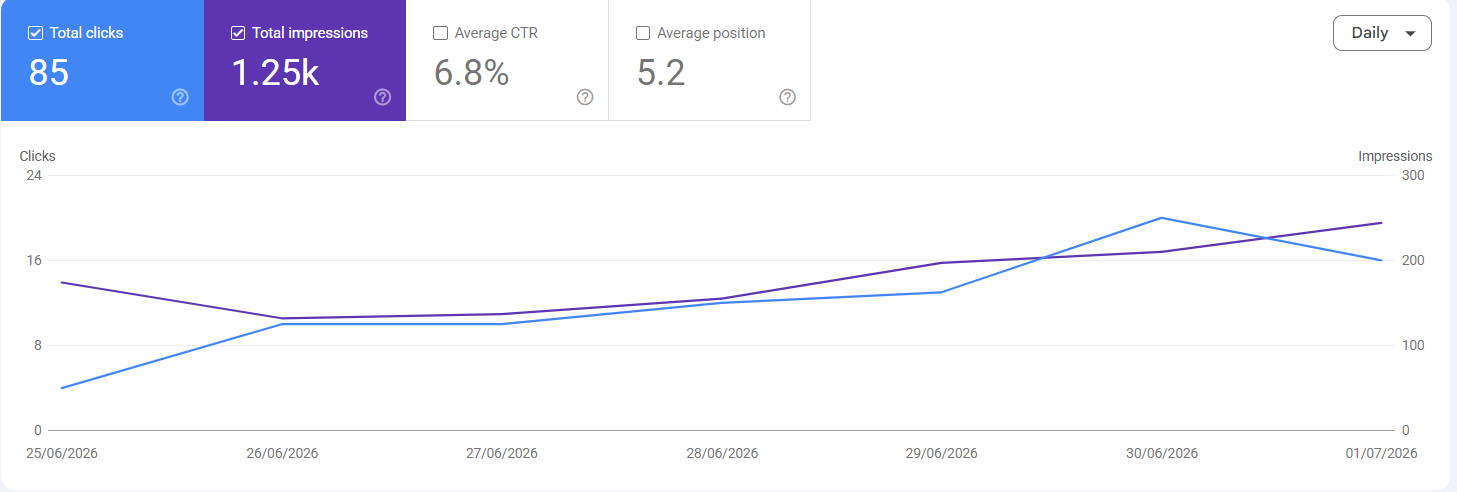
That second finding is actually good news. If one of your pages dropped, the fix is usually at the page level. You do not need to rebuild your site.
How Do You Know If Your Website Was Hit?
Open Google Search Console, go to Performance, and compare June 25 to July 1 against June 14 to 23. If specific pages show a sharp position drop that starts on June 25 or 26, and the drop looks like a sudden step rather than a gradual slide, this update is the likely cause for those pages.
Do this check before touching anything on your site. Diagnosis first, changes second.
The 7-Point Self-Audit Checklist
Run these checks on any page that lost rankings between June 24 and July 1. Each one maps directly to a content pattern in Google’s spam policies.
1. Look for templated, repeated blocks. Open the affected page and check for sections where the same sentence structure repeats with only the keyword swapped. “We provide the best X in Ahmedabad. We provide the best Y in Ahmedabad.” You know the pattern. This is the single most common issue we find in local business audits. Rewrite each block so it genuinely says something different, or merge them into fewer, stronger sections.
2. Count your keyword mentions honestly. Press Ctrl+F on the page and search for your main keyword. On a typical service page, 4 to 6 natural mentions is plenty. If it shows up 15 or more times, especially in footers, image alt tags, and hidden accordions, that is keyword stuffing by 2026 standards. It may have worked in 2022. It works against you now.
3. Check for duplicate URLs of the same page. In Search Console, open Performance, then Pages, and search for your homepage. If you spot versions with tracking parameters like ?utm_ earning impressions separately, your page’s authority is being split across multiple URLs. The usual culprit is the website link in your Google Business Profile. Fix the source and consolidate with a redirect.
4. Audit your AI-generated content for substance. Google updated its spam policies in May 2026 to explicitly cover content designed to manipulate AI answers. Using AI to help you write is fine. Publishing pages of generic AI filler is not. Here is a simple test: does the page contain anything a competitor could not generate with the same prompt? If the answer is no, add real data, real client examples, and real photos.
5. Make sure each page has one clear title. Check that your title tag, your social sharing title, and your H1 all tell the same story. When they conflict, you split your own relevance signal. And drop claims like “#1” or “Best in India” from title tags. They are a risk pattern during an enforcement cycle, and honestly, they were never earning the click anyway.
6. Review thin location and service pages. If you built ten near-identical pages for ten localities, each one 300 words with the city name swapped, those are doorway pages in Google’s eyes. Either make each page genuinely local, with local clients, local proof, and local FAQs, or combine them into one strong page.
7. Study what stayed strong, then do more of it. The pages that sailed through this update in our data all had one thing in common. They answered a real question with specific information: actual prices, actual timelines, actual processes. Your surviving pages are telling you exactly what Google wants from your site. Build your next content around that pattern.
Two Mistakes to Avoid Right Now
We are already seeing businesses make both of these this week, so let me save you the trouble.
Do not disavow links in a panic. This update did not target links. On top of that, the Links report in Search Console has had a widely reported bug since late May, showing artificially low link counts for many sites. Any link decision made on that data right now is a decision made on bad data.
Do not delete pages as your first move. Google’s own guidance treats deletion as a last resort. Some pages dropped because they were directly re-scored. Others slipped simply because a competitor rose. Figure out which is which, then improve the pages that need it. Fix before you cut.
And set your expectations honestly. Google has said that after spam updates, its systems reassess sites over a period of months, with periodic refreshes. The fixes you make now typically show results at the next refresh cycle, not next week. That is exactly why the audit is worth doing this month instead of waiting for the next update to hit.
How We Handle This for Clients at Digihify
When a client’s rankings move during an update window, we follow the same process I described above, just in more depth. We pull daily Search Console data to date the impact precisely. We separate direct hits from pages that only slipped because competitors rose. We audit each affected page against Google’s current spam policies, benchmark against the sites that gained, and hand over a prioritized fix list with expected impact and timelines. It is the same forensic approach we ran on our own monitoring within days of this rollout, which is how the patterns in this post surfaced so quickly.
If your business depends on Google and something changed in late June, the worst thing you can do is guess. As a digital marketing company in Ahmedabad, we are offering a free ranking impact audit. We will tell you whether the June update touched your site, which pages were affected, and what to fix first. With evidence, not assumptions.
Call us at [phone] or message us on WhatsApp for your free audit. And if you are weighing up professional help, our transparent guides to digital marketing costs in India and digital marketing packages in Ahmedabad show exactly what to expect before you spend a rupee.
Frequently Asked Questions
What was the Google June 2026 spam update?
It was a global Google algorithm update that ran from June 24 to 26, 2026. It improved SpamBrain, Google’s AI spam detection system, at catching content that violates its spam policies, such as templated content, keyword stuffing, and doorway pages. It did not target link spam.
How do I know if the June 2026 spam update hit my website?
Open Google Search Console, go to Performance, and compare June 25 to July 1 against June 14 to 23. If specific pages show a sharp position drop starting June 25 or 26, shaped like a sudden step rather than a slow slide, this update is the likely cause.
How long does recovery from a Google spam update take?
Google says its systems reassess improvements over a period of months, with periodic refreshes. Fixes made now usually show results at the next refresh or update cycle, often 6 to 10 weeks away. Quick recoveries within days are rare, so start fixing early.
Should I delete content or disavow links after this update?
No, not as a first step. The June 2026 update did not target links, and Google recommends improving content over deleting it. Identify which pages were actually affected, fix the specific spam policy issues on those pages, and treat deletion as a last resort.




 21 Apr 2026